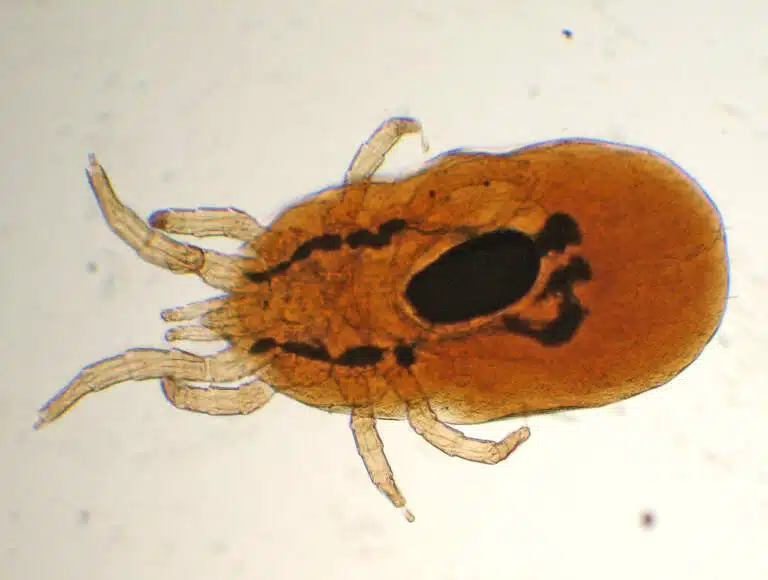
Description and structure
The human louse (Pediculus humanus) is a small parasitic insect that lives on the human body. Its structure is perfectly adapted to a parasitic lifestyle, enabling it to survive and reproduce effectively.
Size and appearance
The human louse reaches a body length of 2 to 4 mm. Its body is greyish or brown, which allows it to easily blend in with the hair or clothes of its host. The body of the louse is flattened dorsoventrally, which makes it easier for it to move between hairs or fabrics.
Head
The head of the human louse is relatively small and has short antennae, which are used to detect odours and chemical stimuli. The mouthparts of the louse are adapted for sucking blood and consist of needle-like organs that allow it to pierce the host’s skin and suck blood. This organ is crucial for the survival of lice, as blood is their only source of food.
Torso and legs
The torso of the human louse is stocky and strongly built, which allows it to move effectively around the host’s body. The louse has three pairs of legs, which end in claws. These claws are extremely effective at gripping and holding onto hair or fabric fibres, which provides stability for the lice and allows them to move between feeding sites. The lice’s legs are adapted to grasp thin structures such as hair, allowing the lice to move in search of new places to suck blood.


Life cycle
The life cycle of the human louse (Pediculus humanus) is short and intense, allowing it to reproduce quickly and infest its hosts effectively. It consists of three main stages: eggs (nits), nymphs and adult lice.
Life stages
- Eggs (nits): The life cycle of head lice begins with the eggs, which are known as nits. Female head lice attach the nits to the base of the host’s hair, close to the scalp, using a sticky substance. The eggs are small, oval and about 0.8 mm long. They are whitish-transparent, which makes them difficult to spot. After about 7-10 days, nymphs hatch from the nits.
- Nymphs: Nymphs are young lice that hatch from the eggs. They look similar to adult lice, but are smaller and sexually immature. Nymphs go through three developmental stages, lasting a total of about 10 days, before reaching adulthood. During these stages, nymphs must feed on the host’s blood several times to move on to the next stage of development.
- Adult lice: After the last moult, the nymph becomes an adult louse. Adult lice are 2 to 4 mm long, fertile and able to reproduce. Females are slightly larger than males and can live up to 30 days on their host. Adult lice lay eggs, continuing the life cycle.
Duration of the cycle
The entire life cycle of human lice, from egg to adult, lasts about 21 days. Under optimal conditions, with access to food and the right temperature, lice can develop very quickly, which favours their rapid spread in the host population.
Reproduction
Human lice reproduce very effectively. Females can lay 6 to 10 eggs a day, which adds up to about 200-300 eggs in their lifetime. High fertility and a short life cycle mean that lice populations can grow rapidly, leading to intense infestations in a short period of time.
Habitats and Spread
- Scalp: Head lice (Pediculus humanus capitis) live and reproduce on the human scalp. They prefer the area behind the ears and along the hairline on the back of the neck, where the temperature and humidity are optimal for their survival. Head lice attach themselves to the hair close to the skin, where they lay their eggs (nits).
- Clothes: The clothes louse (Pediculus humanus humanus) lives in clothes and bedding, only moving to the skin to suck blood. It is most commonly found in the seams and folds of clothes, where it lays its eggs. The clothes louse is particularly common when clothes are worn for a long time without being washed.
Ways of spreading
- Direct contact: The most common way of spreading head lice is through direct head-to-head contact, which is common among children playing together. Lice can move from one person to another when the hair comes into contact with each other.
- Sharing personal items: Lice can also spread through the sharing of personal items such as combs, brushes, hats, scarves, towels, pillows and even headphones. In the case of head lice, sharing clothes and bedding can lead to infestation.
Factors favouring infestation
- Hygiene: Although lice can infest people of any hygiene standard, the lack of regular hair washing and change of clothes can favour their spread. High personal hygiene does not eliminate the risk, but it can reduce the chances of developing an infestation.
- conditions: Living conditions have a significant impact on the risk of infestation. Overcrowding, poverty, lack of access to clean water and proper sanitation favour the spread of lice. Head lice are more common in refugee camps, homeless shelters and places where people are in close proximity for long periods of time without access to clean clothing.
- Population density: High population density, especially in schools, kindergartens and other places where people are in close contact, increases the risk of lice spreading. Children are particularly susceptible to infestation due to frequent close contact while playing.
Symptoms and Health Issues
A human lice infestation (Pediculus humanus) manifests itself in a variety of symptoms that can affect the comfort and health of the infected person. The most common symptoms include:
- Itching: Itchy scalp is the most common symptom of head lice infestation. It is an allergic reaction to the lice’s saliva, which is injected into the skin when they suck blood. The itching can be very intense and lead to constant scratching.
- Redness: The areas of the skin that have been bitten by lice may become red and irritated. The redness is the result of an inflammatory reaction to the bites and may be particularly noticeable behind the ears and on the back of the neck.
- Scalp wounds: Constant scratching to relieve itching can lead to small wounds and abrasions on the scalp. These wounds can become painful and susceptible to infection.
Health problems
Human lice infestation can lead to more serious health problems, especially if not treated quickly and properly:
- Potential for disease transmission: Although head lice rarely transmit disease, the clothes louse can be a vector for serious infectious diseases such as typhus, trench fever and relapsing fever. These diseases have been particularly problematic in the past, especially in war zones and refugee camps.
- Secondary bacterial infections: Wounds and abrasions on the scalp caused by constant scratching can become the site of secondary bacterial infections. Bacteria such as Staphylococcus aureus can infect open wounds, leading to the development of folliculitis, abscesses and other skin complications. In some cases, antibiotic treatment may be necessary to fight these infections.
Methods of Control
Effective control of human lice (Pediculus humanus) requires a combination of prevention, home remedies and drug treatment. Here is a detailed description of the available methods:
Prevention
Prevention is key to avoiding a lice infestation. Here are some effective preventative measures:
- Check hair regularly: Regularly checking the hair of children and adults, especially in places where infestation is likely (schools, kindergartens), can help to detect lice early. It is helpful to use a lice comb to check the hair and scalp thoroughly.
- Avoid sharing personal items: Lice can easily be transmitted by sharing personal items such as combs, brushes, hats, towels, and even headphones. Educating children and adults to avoid sharing these items can significantly reduce the risk of infestation.
Home remedies
If lice are detected, there are several home methods that can help to combat them:
- Lice combs: Special lice combs, called fine-tooth combs, are effective in removing both lice and nits. These combs should be used daily for at least two weeks to ensure that all lice and nits are removed.
- Natural remedies: Some natural remedies, such as essential oils (e.g. tea tree oil, lavender oil, eucalyptus oil), can help repel lice. They can be added to shampoo or applied directly to the scalp, but always keep in mind the potential for allergic reactions.
- Wash bed linen and clothes frequently: Once you have detected head lice, wash all clothes, bed linen and towels thoroughly in hot water (at least 60°C) and dry them on a high heat. Items that cannot be washed can be sealed in airtight plastic bags for two weeks to suffocate the lice and nits.
Pharmaceutical treatment
If home remedies do not work, there are effective pharmaceutical preparations available:
- Over-the-counter shampoos and lotions: Pharmacies stock a variety of shampoos, lotions and sprays that contain chemicals such as permethrin or pyrethrins. These products are effective at killing lice, but may require several applications to completely eliminate the infestation.
- Prescription drugs: In case of lice resistance to over-the-counter preparations, a doctor may prescribe stronger agents such as ivermectin or malathion. These drugs are usually used in more advanced cases and are effective in eliminating lice resistant to standard treatment.
Myths and Facts
Human lice (Pediculus humanus) have long been the subject of many myths and misconceptions. Here are some common myths and the scientific facts to help dispel these misconceptions.
Common Myths
- Myth 1: Only people with poor hygiene have lice:
- Fact: Anyone can get head lice, regardless of their level of hygiene. Although a lack of regular hygiene can encourage the spread of head lice, people who are clean can also get infected. Head lice are attracted to blood, not dirt.
- Myth 2: Head lice jump or fly from one person to another:
- Fact: Lice cannot jump or fly. They move by crawling. Infestation mostly occurs through direct head-to-head contact or through the shared use of personal items such as brushes, hats or pillows.
- Myth 3: Chemicals are the only effective way to get rid of lice:
- Fact: Although chemical agents are effective, there are many other methods that can be equally effective, such as the mechanical removal of lice and nits with special combs and natural lice repellents. Regular washing of bed linen and clothes and good hygiene also play an important role in the fight against lice.
- Myth 4: Pets can transmit head lice to humans:
- Fact: Head lice are specific to humans and cannot be transmitted to pets. Likewise, lice that infest animals cannot be transmitted to humans.
Scientific facts
- Fact 1: Human louse life cycle: Lice go through three stages of life: eggs (nits), nymphs and adult lice. The entire life cycle takes about 21 days. Adult lice can live up to 30 days on the host’s head and lay up to 10 eggs a day.
- Fact 2: Sensitivity to temperature: Lice are sensitive to high temperatures. Washing clothes, bed linen and towels in hot water (at least 60°C) and drying at a high temperature can effectively kill lice and nits.
- Fact 3: Chemical resistance: In some regions, head lice have developed resistance to commonly used chemicals such as permethrin. In such cases, alternative treatment methods may be necessary, including mechanical removal of lice and the use of prescription drugs.
- Fact 4: Importance of regular checks: Regularly checking the hair of children and adults is crucial for the early detection of head lice and prevention of its spread. Early detection of an infestation makes it easier to control and minimises the risk of health complications.
- Fact 5: Prevention and treatment: Effective prevention includes avoiding sharing personal items and regularly checking your hair. If lice are detected, it is important to use appropriate measures, both home and pharmacological, to get rid of the parasites quickly and effectively.
Conclusion
Head lice (Pediculus humanus) are small parasites that can cause significant discomfort and potential health problems. Their presence in our homes, schools and other places where people gather can lead to serious consequences, both physical and emotional.
Combating head lice is not only a matter of individual health, but also of public health. Regular checks, good hygiene and awareness of how lice spread are key to preventing infestations. Effectively combating head lice requires an understanding of their life cycle and the use of appropriate methods, both home and pharmacological.
Frequently asked questions
What is the difference between head lice and body (clothes) lice?
Head lice live and reproduce on the scalp, attaching nits close to the skin, often behind the ears and along the back hairline. Body (clothes) lice live mainly in clothing and bedding, and only move to the skin to feed; they are often found in seams and folds.
How do human lice spread, and can they jump or fly?
Lice spread mainly through direct head-to-head contact and by sharing personal items like combs, hats, towels, pillows, or headphones. They cannot jump or fly—lice move by crawling.
How long does the human louse life cycle take (from nit to adult)?
The full life cycle from egg (nit) to adult lasts about 21 days. Nits hatch after about 7–10 days, and nymphs develop into adults in roughly another 10 days.
What are the most common symptoms of a lice infestation?
The most common symptom is intense itching, caused by an allergic reaction to lice saliva. Other frequent signs include redness and irritation at bite sites and small scalp wounds from scratching.
What should I wash and at what temperature to kill lice and nits?
Wash clothing, bed linen, and towels thoroughly in hot water at least 60°C and dry them on high heat. Items that cannot be washed can be sealed in airtight plastic bags for two weeks.
When should I use OTC treatments vs prescription medication for lice?
Over-the-counter shampoos and lotions (e.g., with permethrin or pyrethrins) are used to kill lice but may need repeat applications. If lice are resistant to OTC products, a doctor may prescribe stronger options such as ivermectin or malathion.